“We tested ten investment scenarios from £700k to £7M—the model showed us exactly which option delivered the best return.”
— Logistics Director
The Challenge
A healthcare company’s warehouse operation was under pressure. Labour costs were rising, product range was expanding, and the existing manual processes couldn’t scale. Automation was the obvious answer—but at what level of investment? A minimal £700k upgrade would deliver some benefits, while a full £7M transformation would revolutionise the operation. The question wasn’t whether to automate, but how much automation was justified.
Each investment level had different implications for layout, staffing, capacity, and return on investment. Engineering proposals offered equipment specifications, but couldn’t show how different automation levels would perform with the company’s actual product mix, order profiles, and growth projections. Without modelled evidence, the CapEx decision remained stuck between conservative underinvestment and risky overcommitment.
The Solution
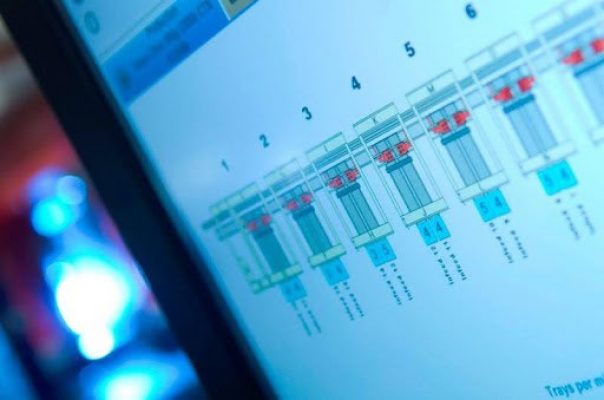
We modelled the warehouse operation across multiple investment scenarios, from minimal automation at £700k through to full transformation at £7M. Each scenario was tested against actual operational data to determine true ROI, labour impact, capacity gains, and layout efficiency.
Investment Scenario Modelling
We built models for each investment level, capturing the specific equipment, layout, and operating parameters that each scenario would deliver. This wasn’t about comparing supplier quotes—it was about understanding how each level of automation would perform in practice with the company’s product range, order volumes, and seasonal peaks.
Layout Optimisation
The model worked alongside the engineering design process to test layout options. Different configurations of racking, conveyors, pick stations, and dispatch areas were evaluated for throughput, labour efficiency, and safety. This iterative approach meant the final layout was optimised for operational performance, not just equipment fit.
ROI Analysis
For each scenario, we calculated true return on investment based on modelled labour savings, throughput improvements, and capacity gains. This analysis revealed that the relationship between investment and return wasn’t linear—there was a clear optimal point where additional spending delivered diminishing returns. The model identified the scenario that maximised ROI.
Capacity Planning
Beyond immediate efficiency gains, the model assessed how each scenario would accommodate future growth. The healthcare product range was expanding, and the warehouse needed capacity headroom. We quantified how much additional product volume each layout could handle before requiring further investment.
The Results
Scenario modelling identified the optimal investment level and delivered a compelling CapEx proposal:
50% ROI from the recommended scenario, validated through detailed operational modelling.
80% reduction in labour requirement through automation designed around actual operational needs.
20% increase in warehouse capacity allowing space for expanded product range without facility expansion.
Improved safety through optimised layout that reduced manual handling and congestion points.
Optimised layout developed iteratively alongside engineering design, balancing throughput with operational flexibility.
Confident CapEx approval with a proposal backed by modelled evidence across the full investment range.
The company invested with certainty—knowing they had tested every option from £700k to £7M and selected the scenario that delivered the best return for their specific operation.