
The Challenge
A mid-sized pickles and condiments manufacturer was operating continuous 24/7 production to meet demand. Management suspected there was significant hidden capacity, but lacked the tools to prove it. Key questions remained unanswered: Could they consolidate to 5-day operations without missing orders? How would changeovers and tank utilisation be affected? What was the true cost of their current product mix?
Spreadsheet-based planning couldn’t model the interdependencies between their bulk storage tanks, batch sauce and syrup cooking processes, and multiple filling and packing lines. They needed a way to test scenarios before committing to operational changes.
The Solution
Wolfwyse built a complete digital twin of the production facility, modelling every constraint from raw material intake through to finished goods despatch:
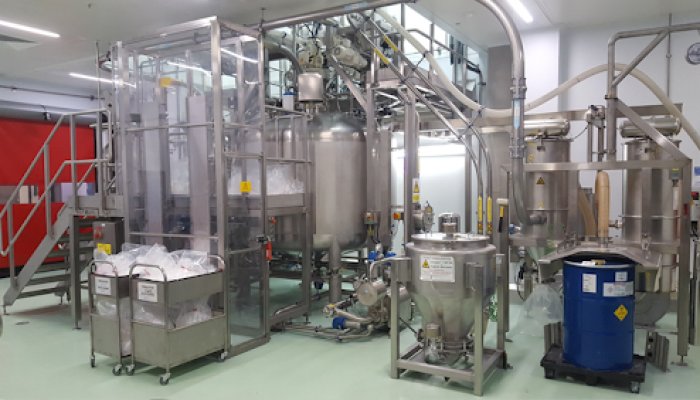
Bulk storage: Inbound storage silos and tanks with capacity limits, fill rates, and delivery cycles
Batch processing: Sauce and syrup cooking vessels with recipe-specific batch sizes, cycle times, and sequencing rules
Intermediate storage: Buffer tanks between cooking and filling, tracking hold times and quality constraints
Filling & packing lines: Multiple lines for filling, capping, labelling and case packing a range of jar sizes and formats with differing line speeds, efficiencies and waste
Optimisation Approach
The model simulated multiple scenarios, testing the impact of different shift patterns, production sequences, and product portfolios. Unlike theoretical optimisation tools, every scenario was validated against real-world constraints: tank capacities, minimum batch sizes, changeover requirements, and crew capabilities.
Wolfwyse’s constraint-based scheduling engine identified production sequences that were physically achievable, not just mathematically optimal.
The Results
| Area | Outcome |
|---|---|
| Shift Pattern | Moved from 24/7 continuous to 24/5 operations, eliminating weekend shifts |
| Labour | Reduced crewing levels by sharing trained crews across filling lines |
| Changeovers | Resequenced production to cut total changeover time by 20% |
| WIP Storage | Reduced intermediate tank requirements by 40% through better scheduling |
| Product Range | Identified and removed low-margin SKUs consuming disproportionate capacity |
| Energy | 15% reduction through consolidated production runs and reduced equipment idle time |
“By modelling the entire production chain, we identified that 12% of SKUs contributed just 3% of margin but consumed 25% of changeover time. Rationalising the product range freed capacity for higher-value production.”
Why It Worked
Spreadsheet analysis was unable to demonstrate how savings could be achieved. Wolfwyse AI tools showed exactly how: which products to sequence together, which crews to share across lines, and which SKUs to discontinue.
The difference between theoretical capacity and achievable output was the difference between a plan that fails on the factory floor and one that delivers results.
Related case studies: AI-optimised scheduling at a vinegar plant applies the same approach to tanks and fermentation, and chocolate moulding shows what buffer storage does to waste.